





The Journey of Iowa Soybeans: From the American Heartland to Asian Tables
Soybeans (Glycine max) are one of the world’s most important oilseed and feed crops. The United States is a leading global producer and exporter of soybeans, with Iowa standing out as the “powerhouse” of U.S. soybean production.
Have you ever wondered how those soybeans growing in Iowa’s fertile black soil cross half the globe to become cooking oil, tofu, or livestock feed for consumers in China? It is a complex logistics journey spanning land and sea, involving multiple modes of transportation.
Let’s trace the global journey of these golden beans.
Stop 1: Iowa Farms – Cultivation and Harvest
Located in the American Midwest, Iowa boasts ideal agricultural conditions: deep, fertile glacial soils, ample summer rainfall, and a mild growing season. The state has massive soybean acreage, and its production consistently ranks among the highest in the U.S.
Farmers plant in the spring (April to May). After a summer of growth, the soybean leaves turn yellow, and the pods mature and dry out.
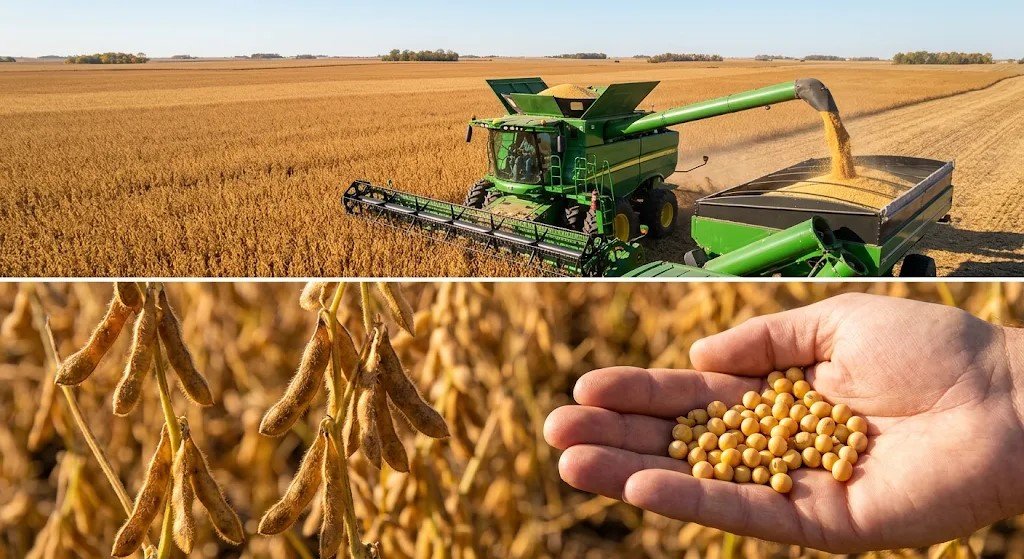
[Figure 1: The Harvest Season]
September through October is the bustling harvest season. Combine harvesters move through the fields, and the threshed golden soybeans are transported directly to nearby grain elevators for cleaning and drying.
Stop 2: Inland Transport – Heading to Waterway Hubs
Soybeans are classic bulk commodities. After harvest, they must be moved quickly from inland farms to major export hubs. For Iowa soybeans, the Mississippi River and its tributaries form the most economical and efficient transportation corridor.
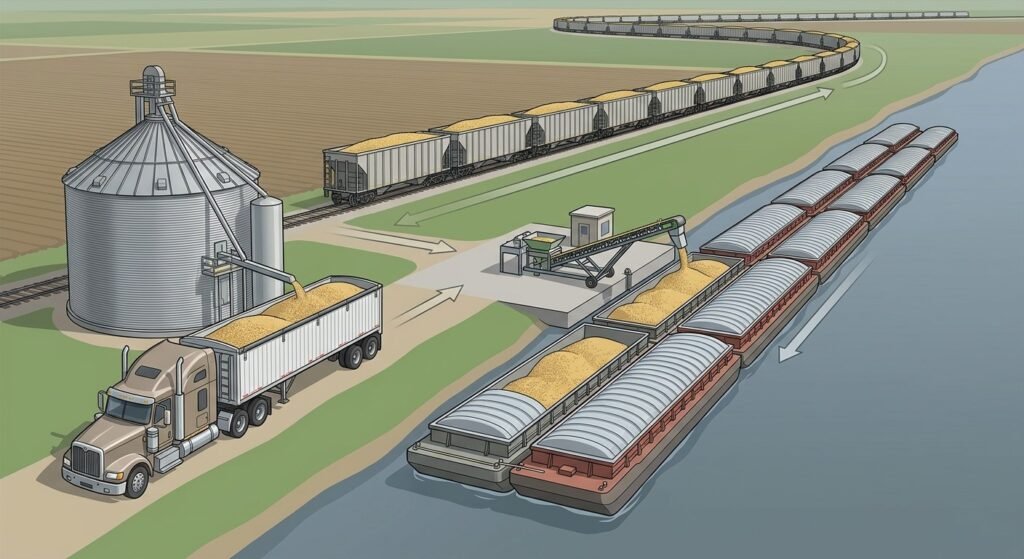
[Figure 2: Inland Logistics Chain]
During this stage, soybeans transition from field to terminal:
- Truck Transport: The primary mode for short hauls, moving soybeans from farms to local grain elevators or river terminals.
- Barge Consolidation: At Mississippi River loading stations, soybeans are loaded into massive barges. A single barge can hold over 1,500 metric tons of soybeans, and multiple barges are lashed together into tows pushed by tugboats down the river toward U.S. Gulf export ports in Louisiana. While slower, this method is exceptionally cost-effective.
Stop 3: Ocean Shipping – Crossing the Pacific
After weeks of inland river navigation, the soybean barge tows arrive at major export ports along the U.S. Gulf (such as New Orleans). Here, the soybeans embark on the largest leg of their journey: loading onto ocean-going bulk carriers for the trans-Pacific voyage.
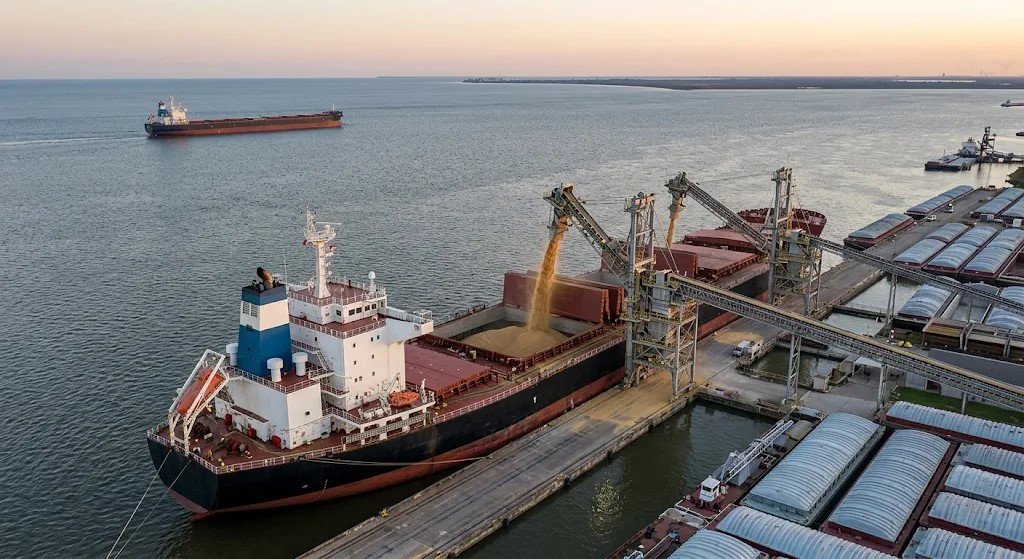
[Figure 3: Gulf Port Loading and Ocean Transit]
he U.S. Gulf region is the primary gateway for American soybean exports, handling roughly 60% of U.S. outbound shipments. Soybeans are loaded into Panamax or larger bulk carriers, with each vessel carrying between 60,000 and 100,000 metric tons.
These fully loaded giants typically take two primary routes to China:
- Via the Panama Canal: The most common route for reaching eastern Chinese ports.
- Via the Cape of Good Hope or Suez Canal: Longer alternative routes chosen based on canal congestion, vessel size, and fuel prices.
This lengthy ocean voyage typically takes 30 to 40 days.
Stop 4: Chinese Ports – Arrival and Reception
Crossing half the globe, the ocean freighters laden with Iowa soybeans finally arrive at major coastal ports in China, such as Dalian, Qingdao, Shanghai, Ningbo-Zhoushan, and Guangzhou. As the world’s largest soybean importer, China features highly efficient port reception and storage facilities.
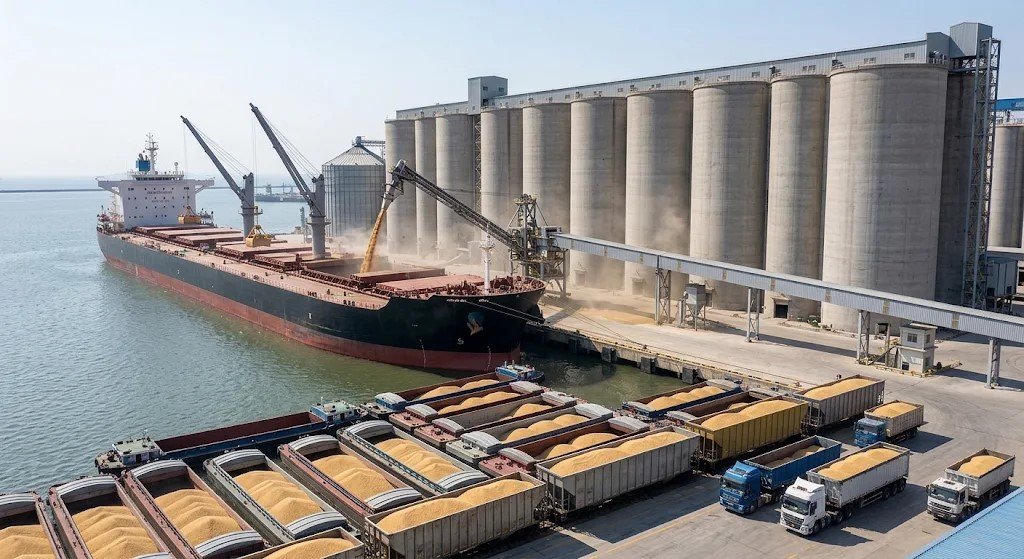
[Figure 4: Chinese Port Unloading and Distribution]
At the port, soybeans enter the final domestic distribution phase:
- Unloading and Storage: High-efficiency pneumatic unloaders extract soybeans from the ship holds into massive onshore silos.
- Transit and Distribution: Imported soybeans rarely linger at ports. They are swiftly transferred via coastal barges (to crushing plants along the Yangtze or Pearl Rivers), bulk freight trains, or trucks to crushing facilities across the country.
Final Destination: Processing and Consumption
Upon arrival at the processing plant, the logistics journey of the Iowa soybeans concludes as production begins. They are typically processed into two main products:
- Soybean Oil: Used for cooking and in the food industry (such as margarine and mayonnaise).
- Soymeal: The protein-rich byproduct of oil extraction, serving as a primary ingredient in animal feed for pigs, poultry, cattle, and fish, which ultimately turns into meat, egg, and dairy products.
A soybean from an American Midwest farm thus crosses land and sea to complete its golden global journey, integrating seamlessly into the daily lives of consumers in China.

Summary: The export logistics of Iowa soybeans form a highly integrated modern supply chain relying on efficient harvesting on Iowa farms, low-cost barge transport down the Mississippi River system, large-scale loading at U.S. Gulf ports, trans-Pacific bulk shipping, and efficient port reception and rapid inland distribution in China. The seamless connection of every link ensures that these golden beans arrive safely and on schedule.


Add Comment