

Francis Halzen and the 2026 Nobel Prize in Physics
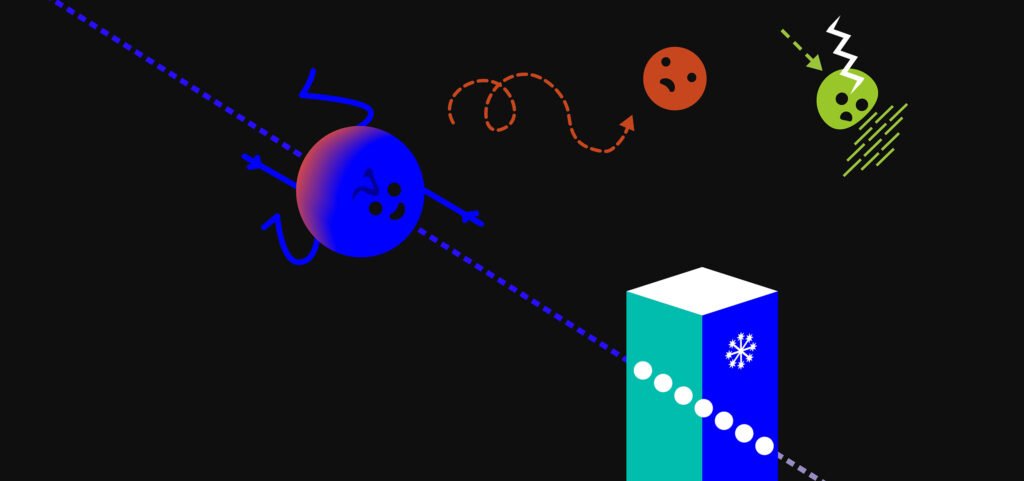
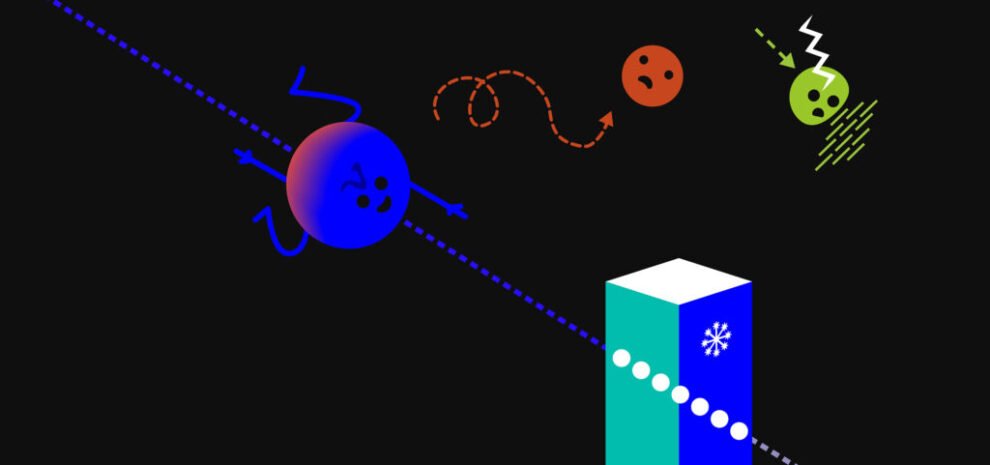
Image credit: © Johan Jarnestad/The Royal Swedish Academy of Sciences.
A new way to listen to the universe
The 2026 Nobel Prize in Physics has been awarded to Francis Halzen of the University of Wisconsin–Madison, USA, for his decisive contributions to the IceCube Neutrino Observatory and the discovery of high-energy neutrinos from cosmic sources.
The universe is usually explored through light: visible light, radio waves, X-rays and other forms of electromagnetic radiation. Halzen helped open another window. His work made it possible to use neutrinos—tiny, electrically neutral particles that rarely interact with matter—to investigate some of the most powerful and distant events in the cosmos.
Neutrinos: the universe’s elusive messengers
Neutrinos are produced in enormous numbers in the Sun and in other energetic processes. They have no electric charge and an extremely small mass. Because they interact so weakly with matter, they can pass through the Earth and our bodies almost unnoticed. In fact, around 65 billion solar neutrinos pass through an area the size of a fingernail every second.
That same ability makes neutrinos valuable messengers. Light and charged particles can be absorbed, scattered or deflected on their journey through space. High-energy neutrinos, by contrast, can travel from distant cosmic environments with their direction largely unchanged. When scientists detect one, it can point back toward violent places such as the regions around supermassive black holes, where nature operates particle accelerators far more powerful than anything humans can build.
Why build a detector inside Antarctic ice?
A neutrino is detected only when it very rarely collides with an atomic nucleus. Such an interaction can create a flash of blue light. IceCube is designed to catch that faint signal. More than 5,000 light sensors are arranged deep in the clear, stable ice beneath the South Pole, instrumenting a volume of roughly one cubic kilometre.
The detector was completed in 2011. When a neutrino interaction produces light, the sensors record when the light arrives and how bright it is. Researchers use those measurements to reconstruct the particle’s path and energy. In 2013, the IceCube collaboration announced the first evidence for high-energy neutrinos arriving from beyond our Solar System. The observatory has since helped establish neutrino astronomy as a new way to study the universe.
The scale is extraordinary: instead of building a detector out of a billion tonnes of material, the team turned a vast natural resource—the Antarctic ice itself—into part of the instrument.
The laureate: from Belgium to Wisconsin
Francis Halzen was born in 1944 in Tienen, Belgium. He earned his PhD from KU Leuven in 1969 and joined the physics faculty at the University of Wisconsin–Madison in 1972. He became a leading figure in particle physics and astrophysics and has served as the principal investigator and a central scientific leader of the IceCube project.
The Nobel recognition highlights not only a scientific idea, but also decades of persistence: developing the concept, testing whether the ice could work as a detector medium, building the observatory in one of the most demanding environments on Earth, and leading a large international research collaboration.
A small beginning for a very big idea
One detail makes the IceCube story especially human. In an interview reported by the American Physical Society, Halzen recalled that the original proposal could sound like a “cute” idea: study the ice, design a hot-water drill, and see whether the approach worked. The team began with practical tests rather than a ready-made kilometre-scale observatory. Step by step, those experiments helped turn an audacious concept into a working telescope buried in Antarctic ice.
It is a useful reminder for students: major discoveries do not always begin with a giant laboratory. Sometimes they begin with a bold question, a testable first step, and a team willing to keep going.
Why this discovery matters to students
IceCube is more than a physics experiment. It brings together particle physics, astrophysics, optical engineering, computer science, data analysis, glaciology, logistics and international collaboration. Its story shows how a question about the smallest particles can require a project on a planetary scale—and how new instruments can create entirely new fields of discovery.
At a glance
| 2026 Nobel Prize in Physics | Francis Halzen |
| Award citation | For decisive contributions to the IceCube Neutrino Observatory and the discovery of high-energy neutrinos of astrophysical origin |
| Born | 1944, Tienen, Belgium |
| PhD | KU Leuven, 1969 |
| University of Wisconsin–Madison | Joined the physics faculty in 1972 |
| IceCube detector | Approximately 1 cubic kilometre of Antarctic ice instrumented with light sensors |
| Observatory completed | 2011 |
| Nobel Prize amount | 12 million Swedish kronor |
Learn more
This FACSS article is an educational introduction based on the official announcement and related scientific background materials. For the Royal Swedish Academy of Sciences’ original press release, including its official wording and illustrations, visit:
The Nobel Prize in Physics 2026 — Official Press Release
Additional background: “Ice at the South Pole reveals cosmic particle accelerators,” The Royal Swedish Academy of Sciences.
https://www.kva.se/en/prizes/nobel-prizes/ice-at-the-south-pole-reveals-cosmic-particle-accelerators
Further reading on the project’s development: “Francis Halzen and the search for ghost particles,” APS News.


Add Comment